Beyond the Beach Exploring the History of Negombo's Dutch Fort and Canal

Chathura Fernando
Travel Writer
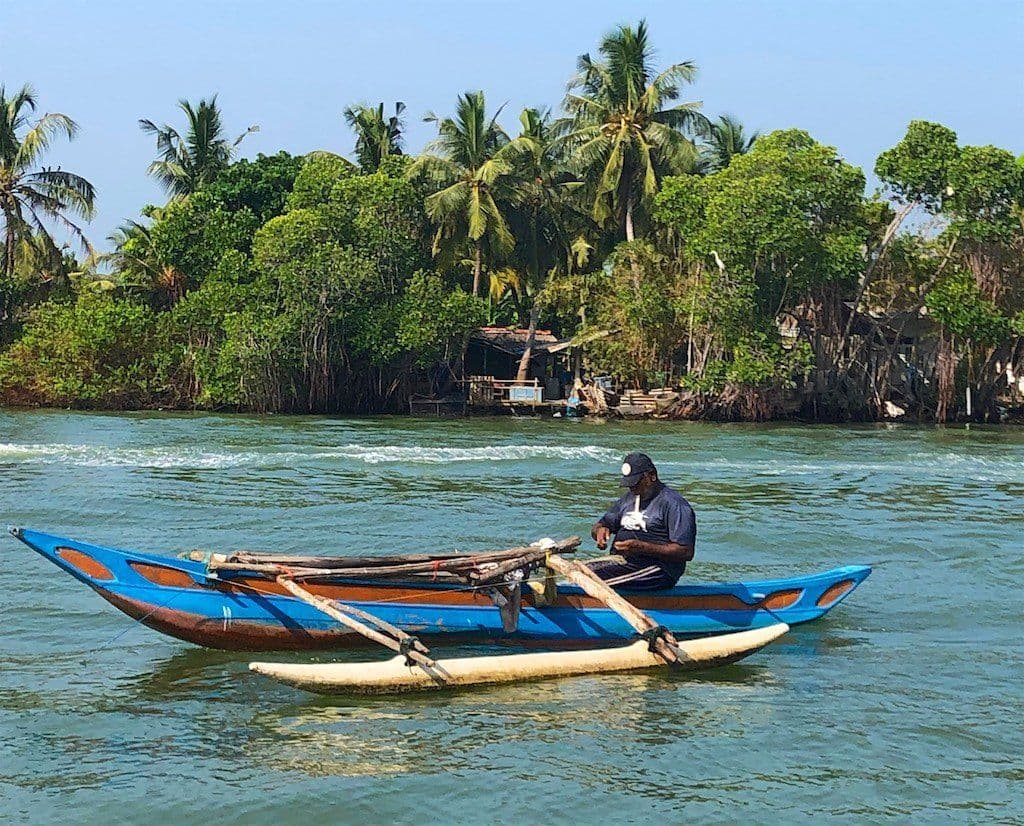
Negombo's appeal stretches far beyond its palm fringed shoreline. To truly understand the city's unique character, one must look inland, towards its historical remnants and its vital, man-made waterways. The ruins of the Dutch Fort and the long, serene stretch of the Hamilton Canal are not just landmarks; they are tangible threads connecting modern Negombo to its complex colonial past under the Portuguese, Dutch, and British empires.
The Echoes of Empire: Visiting the Dutch Fort Ruins
The story of the Negombo Fort is a tale of strategic importance and imperial conflict. Initially, the site was occupied by the Portuguese in the 17th century who built a small defensive structure to protect their trade routes. However, it was the Dutch, masters of trade and fortification, who realized Negombo's critical value particularly its proximity to the cinnamon growing regions and successfully captured and fortified the town.
The Dutch demolished the original Portuguese structure and, in 1672, rebuilt a stronger, pentagonal fort on a narrow strip of land between the lagoon and the sea inlet. This new stronghold featured four bastions and was surrounded by a dry moat, a testament to 17th century military engineering.
From Fortress to Prison
The fort's military purpose faded with the arrival of the British in 1796. The British, who found little military need for it, systematically demolished a significant portion of the ramparts in the late 19th century and used the stones to build a prison on the same site.
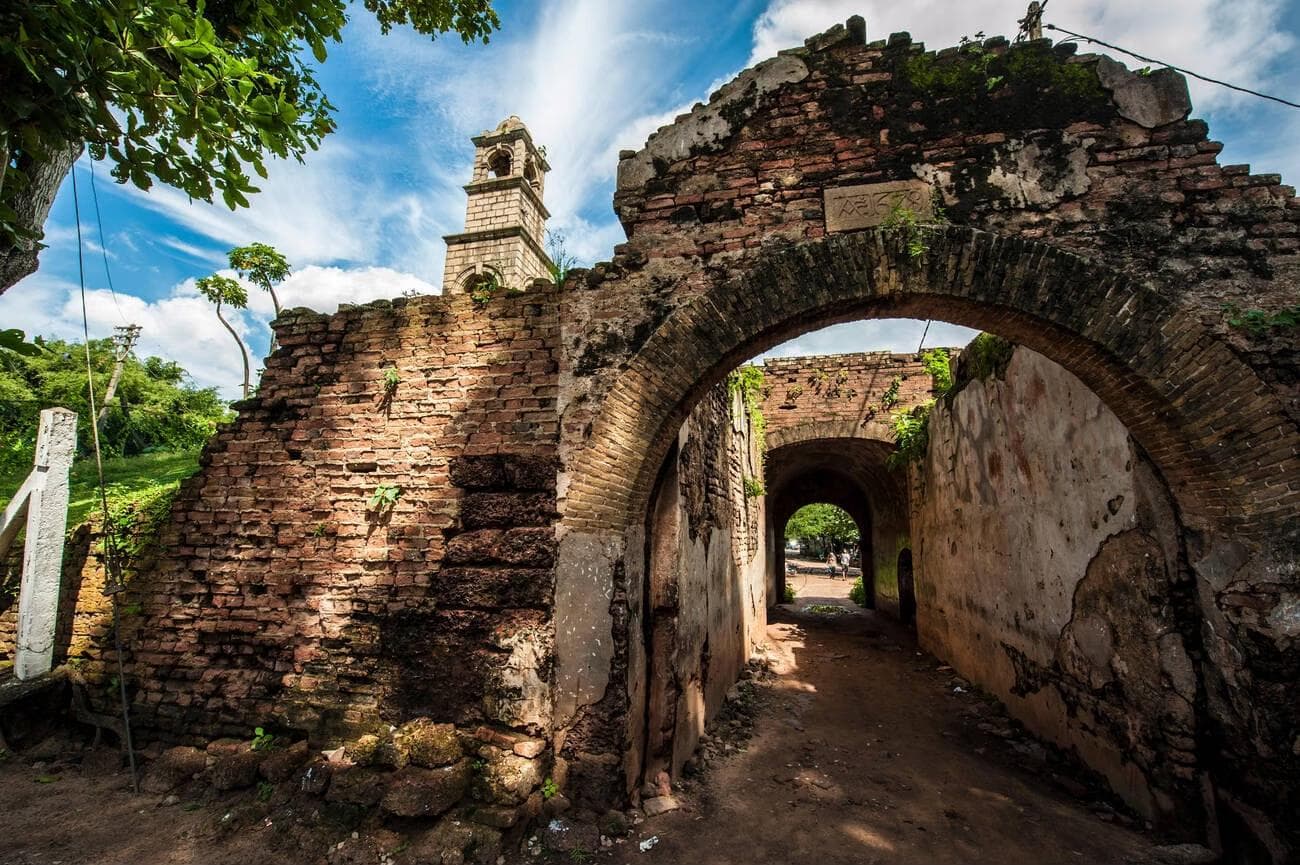
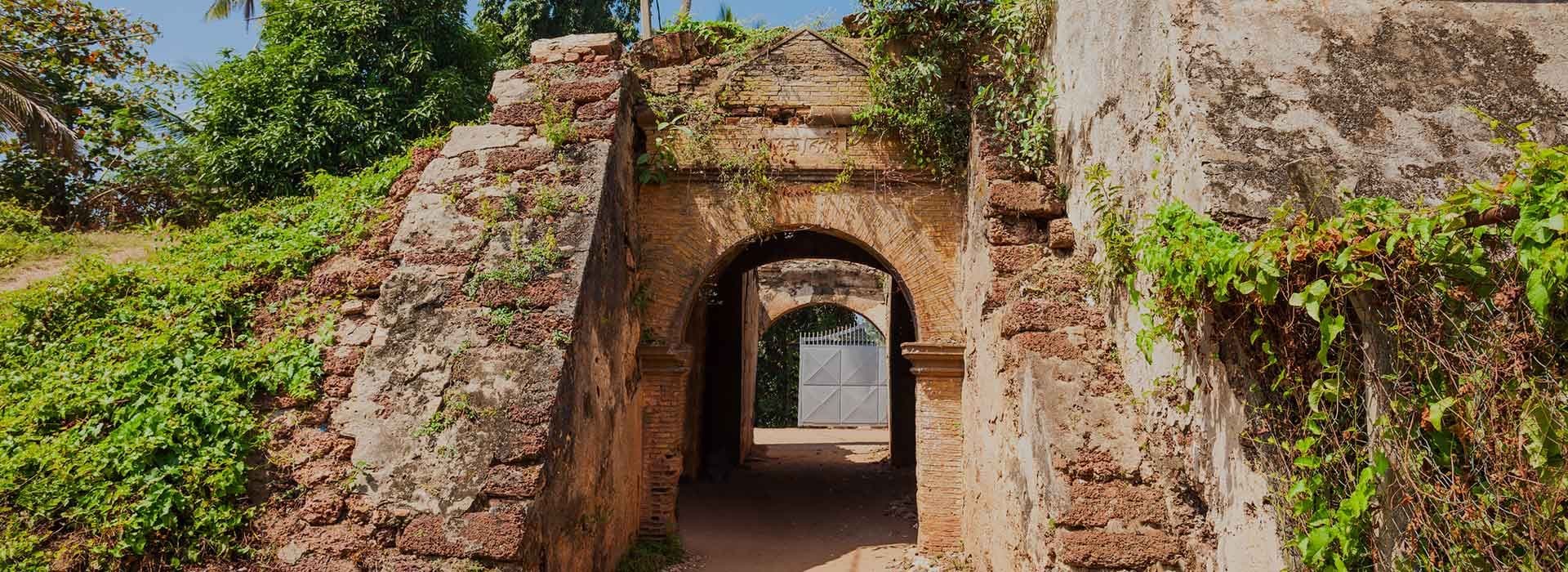
Today, the fort is not a sprawling museum but a collection of atmospheric ruins that demand a brief, reflective visit. All that remains is a segment of the eastern rampart, two large earthen mounds where the bastions once stood, and most significantly, the beautifully preserved recessed arched gateway. Above this arch, a granite slab is inscribed with the date 1678, marking the period of its Dutch reconstruction.
The site still functions as a prison, which means visitors cannot wander the entire grounds. However, the external remnants and the iconic gate offer a powerful glimpse into the city’s past and provide a wonderful backdrop for photographers interested in history and architecture.
The Lifeblood of Trade: Cruising the Hamilton Canal
Just adjacent to the fort, you will find the Hamilton Canal, a waterway whose history is as layered as the fort's. The canal is part of a much larger, pre-existing network of canals originally built by the Dutch to facilitate the transport of cinnamon, spices, and other goods between their key coastal forts like Colombo, Negombo, and Puttalam, avoiding the rough sea voyage.
A British Legacy on Dutch Foundations
The canal that passes directly through Negombo is most commonly referred to by its British-era name, the Hamilton Canal, after Gavin Hamilton, a Government Agent who oversaw its expansion and construction between Colombo and Negombo in the early 1800s. The British used the canal, which runs parallel to the coast, not only for commerce but also for drainage, specifically to manage the salt water intrusion into the nearby Muthurajawela Wetlands.
An Immersive Local Experience
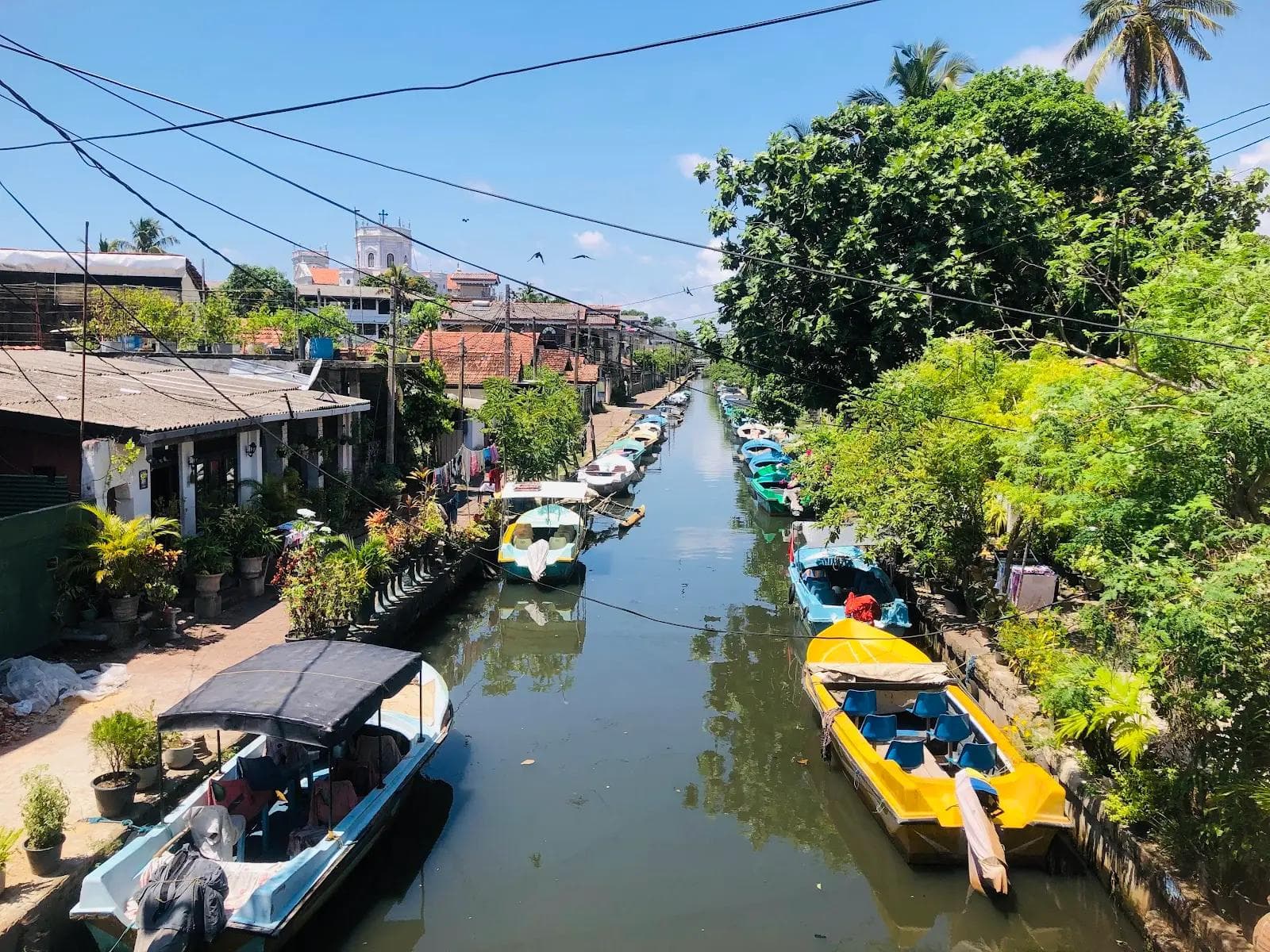
Unlike a dusty historical ruin, the Hamilton Canal is a living, breathing part of Negombo life. The most rewarding way to experience it is by taking a boat tour. These leisurely cruises offer a unique perspective on the city that you cannot get from the roads.
As you glide through the calm, brown waters, you pass by the homes of the local fishing community. You will see children playing on the banks, fishermen mending their nets, and small canoes transporting goods or people. It is a peaceful contrast to the bustle of the main city streets.
The canal connects seamlessly with the vast Negombo Lagoon, providing tours with views of the rich ecosystem. Keep your eyes peeled for monitor lizards basking in the sun and a variety of birdlife, particularly different species of herons and kingfishers, that thrive in the mangrove areas. The golden hours of early morning or late afternoon are the best times for a boat trip, offering cooler air and stunning light for photography.
How to Explore and What to Know
The fort and the canal are located centrally, making them easy to combine into one historical walking and boating half-day trip.
- Best Time to Visit: The fort can be visited at any time, but the early evening offers the best light for photography. For the canal, book a boat trip for the early morning (around 8:00 AM) to catch the canal life beginning its day, or a late afternoon tour to enjoy the sunset on the lagoon.
- Accessing the Fort: Access to the surviving fort area and the historic gate is generally free. Remember to be respectful, as the surrounding area is still used by the Department of Prisons.
- Canal Tours: Numerous local operators near the lagoon and along the canal offer boat trips. These tours vary in length (typically two to three hours) and often include a journey into the adjoining Muthurajawela Wetland Sanctuary for birdwatching. Always confirm the duration and route before departing.
The Dutch Fort and the Hamilton Canal are essential pieces of Negombo's identity, offering a deep dive into the strategic history and enduring waterway culture of this beautiful coastal city.
Enjoyed this story? Share it
About the Author
Chathura Fernando
A passionate cultural explorer and travel storyteller dedicated to uncovering the ancient secrets, golden sandy beaches, historic Dutch canals, and the rich coastal heritage of Negombo — the vibrant gateway to Sri Lanka.